Running Gait Analysis Cost in 2026: 2D vs 3D, Benefits & What to Expect
Running looks simple from the outside: put one foot in front of the other and move faster. In reality, every runner has a slightly different combination of posture, cadence, joint motion, foot strike, strength, mobility and timing. That is why two people can run at the same pace while looking completely different.
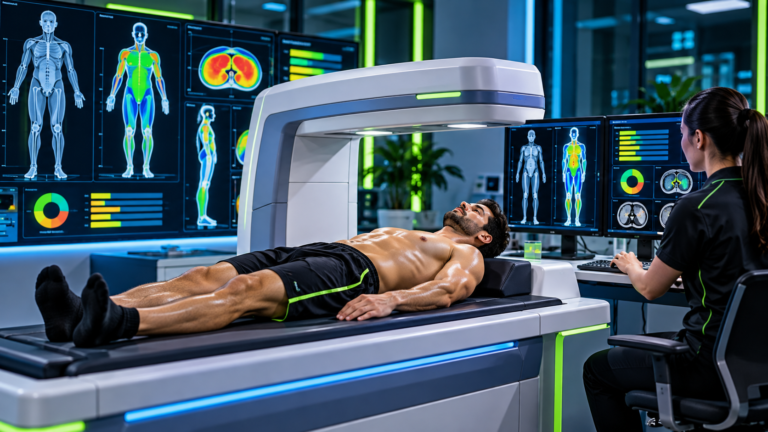
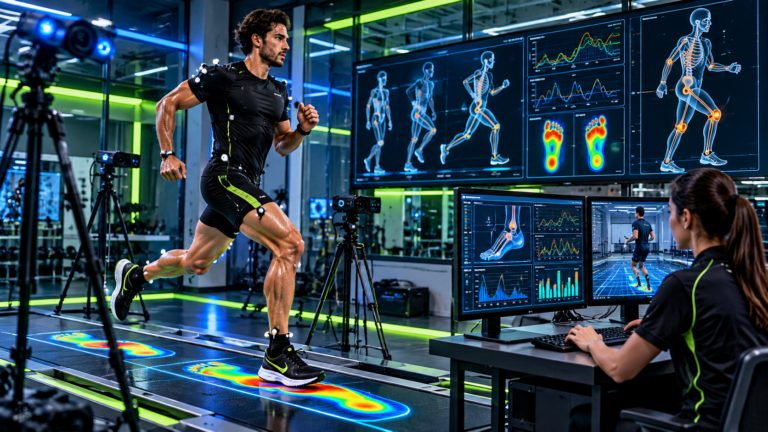
A running gait analysis is designed to look more closely at those movement patterns. Depending on the provider, it may involve slow-motion video, treadmill running, strength and mobility testing, force measurements, 2D or 3D motion capture, and a detailed discussion about training history.
For runners, sprinters and athletes, the big question is often not simply “What is gait analysis?” but how much does running gait analysis cost, what do you actually get for the money, and is the more expensive technology worth it?
The short answer is that there is no single national price. Publicly listed U.S. prices in 2026 show a wide range. The University of Kentucky BioMotion Lab lists a 2D running gait evaluation at $175 and a 3D evaluation at $350. Hospital for Special Surgery lists its Running Mechanics Assessment at $370, while one private sports performance facility lists a basic running analysis at $115. These are examples rather than a universal market price, and local pricing can change.
The more useful question, therefore, is what type of assessment you are buying.
What Is a Running Gait Analysis?
A running gait analysis is an assessment of how your body moves while you run. A simple version may involve a coach or specialist filming you from the side and rear. A more complete clinical or performance assessment can combine video with strength testing, flexibility screening, injury history, footwear review and biomechanical measurements.
Sports medicine programs often look at far more than foot strike. Johns Hopkins describes running assessment as including gait and balance analysis alongside musculoskeletal evaluation, while UPMC says its running assessment may examine strength, endurance and flexibility before recording gait data such as cadence, ground contact time and vertical oscillation.
That distinction matters because the term “gait analysis” is used for several different services.
A free running-store assessment, a $100 video session and a $350 laboratory analysis should not be assumed to provide the same level of detail.
Running Gait Analysis Cost: What Should You Expect?
Prices depend heavily on the technology, qualifications of the person performing the assessment, location and whether the service is aimed at shoe fitting, sports performance or rehabilitation.
A basic video analysis is usually the simplest paid option. The runner may spend time on a treadmill while video is recorded from one or more angles. The provider then reviews visible movement patterns and may discuss cadence, posture, foot placement or shoe choice.
More detailed assessments often cost more because they may include a physical examination, strength and mobility testing, specialized treadmills, multiple high-speed cameras, force plates or 3D motion-capture technology.
For perspective, the University of Kentucky’s current published pricing is $175 for a 2D evaluation and $350 for a 3D evaluation. Both are described as approximately 90-minute assessments, with the 3D version adding a multi-camera setup and force-plate treadmill plus a follow-up review. Hospital for Special Surgery lists a $370 Running Mechanics Assessment and also sells larger performance-testing packages that combine running mechanics with metabolic testing and other services.
This shows why searching only for the cheapest price can be misleading. The real comparison should be:
What testing is included? Who performs it? How long is the appointment? Do I receive a report? Are recommendations included? Is follow-up support included?
2D Running Gait Analysis Explained
Two-dimensional gait analysis usually relies on video captured from selected angles.
For many runners, this is already a substantial step beyond simply watching themselves run in a phone recording. High-speed video can allow a trained professional to slow the movement down and examine positions that are difficult to see in real time.
A 2D assessment may look at areas such as:
- trunk position
- hip and knee movement
- leg alignment
- cadence
- foot placement
- stride characteristics
- vertical movement
- side-to-side differences
Hospital for Special Surgery explains that a professional gait assessment may observe runners from the front, sides and back while examining cadence, ground contact time, vertical oscillation and positions of the ankle, leg, trunk, pelvis, knees and upper body.
The main advantage of 2D testing is practicality. It can provide useful visual information without the equipment and processing demands of a full motion-capture laboratory.
The running gait analysis cost can vary significantly depending on whether you choose a basic video assessment or a full 3D biomechanics evaluation.
For recreational runners, athletes returning to training or people who simply want a professional look at their mechanics, 2D video analysis may provide enough information to answer their main questions.
What Is 3D Gait Analysis?
Three-dimensional gait analysis is more technologically intensive.
Instead of viewing movement mainly in flat video planes, 3D systems attempt to capture motion through space. Depending on the laboratory, this can involve multiple synchronized cameras, markers, sensors or instrumented treadmills.
The University of Kentucky describes its 3D assessment as using 13 high-speed cameras together with a force-plate embedded treadmill. UPMC describes using the RunDNA 3D Helix system to collect real-time biomechanical information during running.
The potential benefit is more detailed data.
The downside is that more data does not automatically mean better decisions.
A sophisticated report is only useful if someone qualified can interpret it, explain which findings matter and connect those findings to realistic training or rehabilitation changes.
That is one reason the provider can matter as much as the technology.
2D vs 3D Gait Analysis: Which Is Better?
There is no universal winner.
A runner who simply wants to review running mechanics may not need a full laboratory setup. Someone with a complicated history, repeated symptoms, a return-to-sport question or a high-performance objective may value a deeper assessment.
Think of it this way.
A 2D assessment can be a good fit when your main goal is to get professional feedback on visible running mechanics, strength, mobility and basic movement patterns.
A 3D assessment becomes more attractive when you want more detailed biomechanical data, multiple planes of motion or force-related information and the provider has a clear reason for collecting it.
The important point is not to assume that expensive equipment automatically produces an important diagnosis or guarantees faster running.
What Happens During a Professional Running Assessment?
A quality assessment usually begins before you step onto the treadmill.
The specialist may ask about your running history, weekly training, shoes, previous injuries, current discomfort, race goals and other sports you play.
Many programs then perform physical tests.
For example, Mass General Brigham says an initial evaluation may include an instrumented treadmill, slow-motion video, strength and flexibility screening, alignment assessment and footwear review. Drexel University describes a running analysis that includes a review of training and injury history, a musculoskeletal examination and video from multiple angles.
Then comes the running portion.
You may start at an easy pace while the specialist records video or captures data. Some assessments use several speeds because movement can change when you run faster.
Afterward, the provider should explain the findings.
A useful assessment should not leave you with a complicated chart and no idea what to do next.
What Should a Gait Analysis Report Include?
Reports vary, but a useful one may contain:
- key observations from the running video
- strength or mobility findings
- cadence or timing data
- photos or video stills
- explanation of any relevant asymmetries
- exercise recommendations
- technique cues
- footwear considerations
- training adjustments
- follow-up recommendations
HSS notes that runners may receive a written report with findings and recommendations, while the University of Kentucky says its 3D assessment provides a summary document containing collected data.
Before paying, ask whether a written report is included. That can make the session much more useful later.
Can Gait Analysis Prevent Running Injuries?
This is an area where marketing claims need to be treated carefully.
A running assessment may identify movement patterns, strength limitations or other factors that a qualified professional believes are relevant to your symptoms or training. Clinics use gait analysis as one part of broader assessments for runners.
However, it is too strong to say that having a gait analysis will automatically prevent injuries.
Running-related problems can be influenced by training load, recovery, previous injury, sleep, surface, footwear, strength, technique and many other factors.
For that reason, Sprintaa recommends thinking of gait analysis as information, not a guarantee.
If you have pain, an injury or a medical concern, a professional healthcare evaluation may be more appropriate than a purely performance-focused gait session.
Is Running Gait Analysis Only for Injured Runners?
No.
Running clinics work with recreational runners, competitive athletes and people returning from a break, not only people with injuries. Johns Hopkins states that its program serves runners across age and ability levels, while Drexel’s program includes runners seeking injury recovery, injury-risk reduction or performance goals.
A healthy runner might book an assessment because they want to understand their form before increasing mileage or starting a structured training block.
A sprinter might be interested in how posture or lower-limb mechanics change at faster speeds.
A distance runner may want to discuss movement efficiency and training load.
The best reason to book is not because everyone “needs” one. It is because you have a specific question that the assessment is capable of answering.
Does a Running Store Gait Analysis Count?
Sometimes, but it is usually a different service.
Running stores often provide short treadmill or foot assessments to help customers choose shoes. These sessions can be helpful for footwear shopping, but they should not automatically be treated as equivalent to a clinical biomechanics evaluation.
The provider’s objective matters.
A retail assessment is generally designed to help choose a product.
A sports performance assessment may focus on mechanics and training.
A physical therapy or sports medicine evaluation may combine gait with symptoms, strength and physical examination.
None of these is automatically “bad.” They simply answer different questions.
Is Gait Analysis Covered by Insurance?
Coverage is complicated because the phrase “gait analysis” can describe both elective performance testing and medically necessary rehabilitation services.
A standalone sports-performance assessment may be self-pay, while services provided as part of medically indicated physical therapy may be handled differently.
Never assume coverage based only on the clinic name.
Before booking, ask:
- Is this billed as physical therapy or as a performance service?
- Is a referral required?
- Is the assessment self-pay?
- Can the clinic provide a billing code?
- Should I contact my insurer first?
UPMC specifically advises patients to consult their health plan regarding coverage questions.
What Should You Wear to a Running Gait Analysis?
Wear clothing that allows your movement to be seen clearly.
Running shorts, fitted tights and a comfortable top usually work well. Bring the shoes you currently run in. If you rotate between two pairs, ask whether both should come with you.
The University of Kentucky tells runners to bring their running shoes and recommends clothing that allows clear visualization on camera.
It can also be helpful to bring a brief summary of your recent training.
You do not need a perfect spreadsheet. Basic information such as weekly mileage, sprint sessions, race goals and recent changes may give the provider useful context.
Questions to Ask Before Booking
A short phone call or email can prevent disappointment.
Ask these questions:
Who performs the analysis?
Look for appropriate experience in running, biomechanics, sports performance or rehabilitation.
What technology is used?
“Gait analysis” alone tells you very little.
How long is the session?
A 15-minute retail screening and a 90-minute clinical evaluation are different products.
Do you evaluate strength and mobility?
Movement on the treadmill is only one piece of the picture.
Will I receive a report or videos?
Are recommendations included?
Is there a follow-up session?
What is the full price?
Is the service self-pay or potentially billable to insurance?
These questions make it easier to compare providers on value rather than on marketing language.
Is Running Gait Analysis Worth the Cost?
It can be, but only when the service matches your goal.
If you are running comfortably, progressing well and have no specific mechanics question, you may decide that the money is better spent elsewhere.
If you repeatedly struggle with the same issue, are returning to running, want professional feedback on form, or are serious about understanding biomechanics, an assessment may be more valuable.
The best gait analysis is not necessarily the one with the most cameras.
It is the one that answers a useful question, is performed by someone who understands running, and gives you recommendations you can actually use.
Can You Do a Gait Analysis at Home?
You can perform a basic video review at home.
A smartphone capable of slow-motion recording can show things you may never notice while running. Record from the side, behind and front where safe.
However, self-video has limitations.
Camera angle changes how movement looks. You may not know which patterns are meaningful. It is also easy to focus on one feature—such as foot strike—while ignoring the rest of the body.
A home video can be useful for learning, but it is not automatically a substitute for a professional assessment.
Gait Analysis for Sprinters
Most public running-clinic services are marketed heavily toward distance runners, but movement analysis can also be relevant to sprint athletes.
The key difference is speed.
Mechanics observed during easy treadmill running may not fully represent maximal sprinting on a track.
If you are a sprinter, ask the provider whether the assessment can evaluate running at speeds relevant to your event. Also ask whether they have experience with acceleration, upright maximum-velocity mechanics and sprint-specific training.
A general runner’s assessment and a sprint-performance analysis are related, but not identical.
That distinction fits Sprintaa’s wider approach: numbers and technology are most useful when they are interpreted in the correct context.
The Bottom Line
Running gait analysis can range from a relatively simple video review to a sophisticated 3D biomechanics assessment.
Current published U.S. examples show prices ranging from around $115 for a private running analysis to $175 for a university-based 2D assessment, $350 for the same university’s 3D assessment, and $370 for a hospital-based running mechanics assessment. These prices are examples, not guaranteed national averages, and providers can change their pricing.
When comparing options, focus on what is included rather than choosing solely by price.
A useful assessment should help you understand how you run, explain which findings matter, and give you practical next steps.
For many athletes, a well-explained 2D analysis may be more useful than an expensive 3D report they do not understand.
For others, advanced testing may provide exactly the additional detail they are looking for.
The goal is not to collect more numbers. It is to turn the right numbers into better understanding.
Frequently Asked Questions
How much does running gait analysis cost?
There is no fixed national price. Current public examples range from roughly $115 for some private analyses to $350–$370 for more comprehensive 3D or hospital-based assessments. Always confirm current pricing directly with the provider.
Is 3D gait analysis better than 2D?
Not automatically. 3D analysis can collect more detailed motion data, but the best choice depends on your question, budget and the skill of the person interpreting the results.
How long does a running gait analysis take?
It varies. Comprehensive programs may take around an hour or longer; the University of Kentucky lists approximately 90 minutes for its 2D and 3D evaluations, while Mass General Brigham describes a comprehensive initial running evaluation as a two-hour appointment.
Should I get gait analysis if I have pain?
If you have pain or an injury concern, consider a qualified healthcare professional who can assess the problem rather than relying only on a retail or performance-focused analysis.
Can gait analysis make me faster?
An assessment by itself does not make you faster. Its value is in identifying potentially useful information and helping guide appropriate training or technique decisions.
What should I bring?
Bring the shoes you normally run in, comfortable running clothes and any useful information about your recent training, goals or symptoms.
Is running gait analysis the same as shoe fitting?
No. A running-store assessment may help with footwear selection, while a clinical or performance gait analysis can include broader biomechanics, strength, mobility and training review.
Should sprinters get gait analysis?
It can be useful, but sprinters should look for someone experienced with high-speed running and sprint mechanics rather than assuming a distance-running treadmill assessment answers every sprint-specific question.