DEXA Scan Cost in 2026: Body Fat, Muscle & Price Guide
For runners and athletes, body weight alone tells very little about what is actually changing inside the body. Two athletes can weigh exactly the same while having very different amounts of muscle, fat and bone mass. That is one reason DEXA body composition testing has become popular in sports performance, fitness and weight-management settings.
A DEXA scan—also written as DXA—uses low-dose X-rays to estimate body composition. Depending on the system and provider, the report may show total body fat percentage, regional fat mass, lean tissue, bone mass and visceral fat.
The first question many people ask is simple: how much does a DEXA scan cost in 2026?
There is no single U.S. price. Current public prices from established university and sports-performance programs vary significantly. UC Davis Sports Medicine lists an initial body-composition DXA assessment at $95 and follow-up testing at $75. George Washington University lists a DXA body-composition scan at $200, while Colorado State University lists its DEXA scan at $210.
That means the real question is not simply whether a scan costs $95 or $210. It is what the provider measures, what explanation you receive, whether the scan is for body composition or diagnostic bone-health purposes, and whether follow-up testing is included.
What Is a DEXA Body Composition Scan?
DEXA stands for dual-energy X-ray absorptiometry. You may also see the abbreviation DXA. Both names are commonly used for the same general technology.
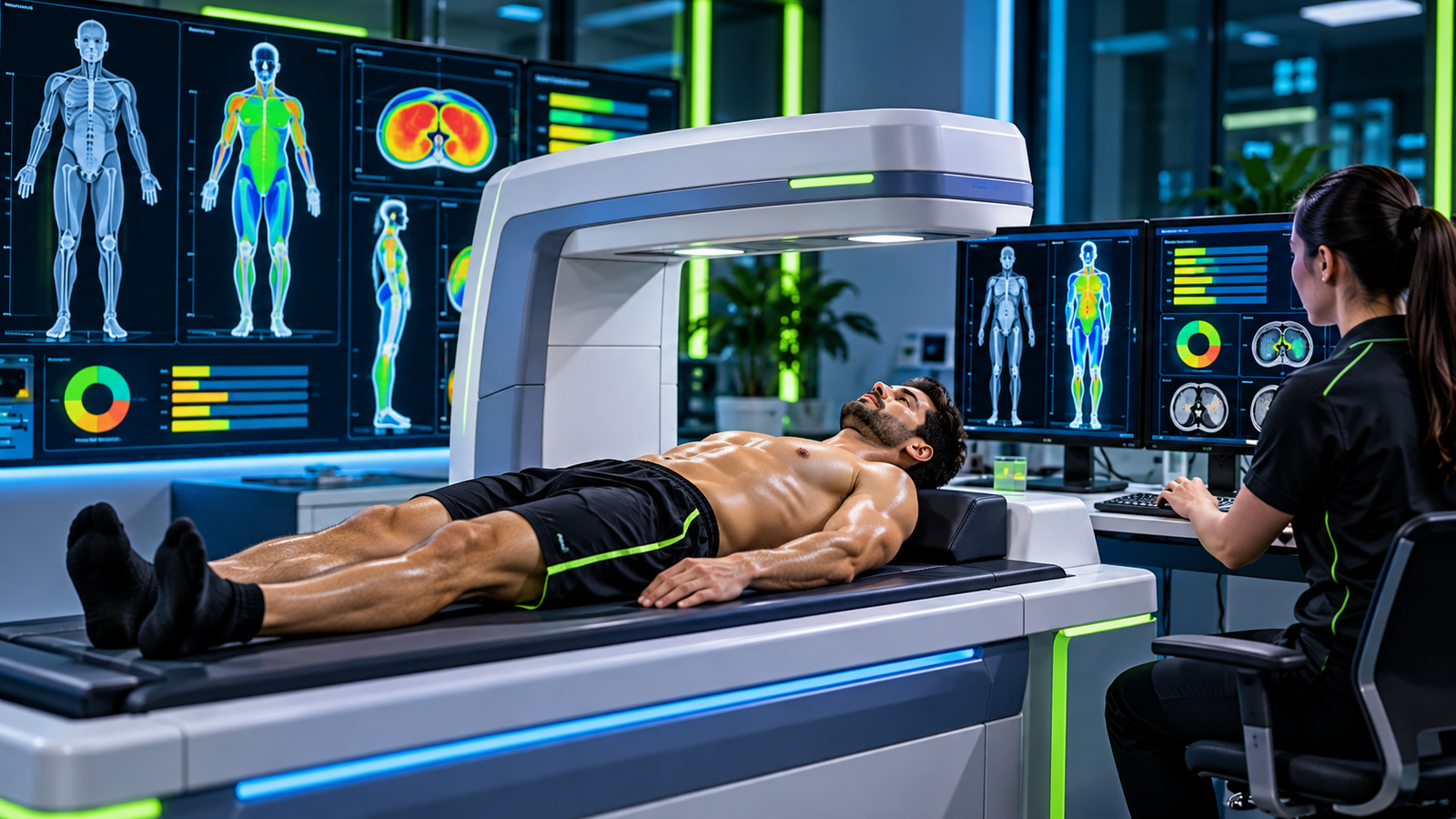
During a body-composition scan, the machine sends very low-dose X-rays through the body while you lie still on a scanning table. The system uses differences in X-ray absorption to estimate different tissue compartments.
A sports-performance report can include measurements such as body fat percentage, fat mass, lean tissue and regional composition. George Washington University says its DXA service provides total and regional fat and lean mass as well as visceral fat, while UC Davis describes its body-composition service as providing fat, lean tissue and other performance-focused measurements.
This is more detailed than simply stepping on a bathroom scale.
A scale tells you total weight. DEXA attempts to tell you what that weight is made of.
How Much Does a DEXA Scan Cost in 2026?
Current prices show a wide range even among university and medical-performance programs.
UC Davis Sports Medicine lists an initial DXA body composition analysis at $95, with follow-up tests at $75. It also offers reduced pricing when DXA is paired with certain performance or wellness assessments.
George Washington University currently lists a single DXA scan at $200 and states that insurance is not accepted for its performance-testing service. It also offers a DXA plus resting metabolic rate package for $240.
Colorado State University lists its body-composition DEXA scan at $210. Its program describes the test as a body-composition assessment for fat mass, lean mass and related performance information.
So, based on these current public examples, a self-pay body-composition DEXA scan can cost roughly $95 to $210 or more, depending on provider and location.
That is not a national average. Private clinics in high-cost cities may charge more, while university programs may charge less.
What Affects DEXA Scan Cost?
DEXA scan cost depends on more than the machine itself.
One provider may sell a basic scan with a short results review. Another may include a longer consultation, regional muscle analysis, visceral-fat interpretation, nutrition guidance or repeat-testing discounts.
Location also matters. A university exercise-science laboratory may operate with a different pricing structure than a hospital or private sports-performance clinic.
Packages can change the effective price as well. UC Davis lists a comprehensive fitness assessment that includes DXA, resting metabolic rate testing, movement screening and exercise-metabolism testing for $350.
Colorado State also offers broader wellness packages that combine DEXA with laboratory work, functional assessments and consultation.
So when comparing prices, ask what is actually included.
A $200 scan with a detailed review may offer more value than a $120 scan that gives you a printout with no explanation.
What Affects DEXA Scan Cost?
DEXA scan cost can vary based on the provider, location, consultation time and whether the scan is part of a larger performance or wellness package. A higher DEXA scan cost does not always mean a better service, so compare what is included before booking.
What Does a DEXA Scan Measure?
A body-composition DXA report can provide several types of information.
The most familiar number is body fat percentage. This estimates what percentage of total body mass is fat tissue.
You may also see lean mass, which represents non-fat soft tissue. For an athlete, changes in lean mass can be useful when evaluating a long-term strength or training program.
Many systems also report body composition by region. Instead of seeing only a whole-body number, you may see measurements for the arms, legs and trunk.
Some services report visceral adipose tissue, meaning internal abdominal fat around the organs. UC Davis specifically includes visceral adipose tissue information in its body-composition analysis.
A whole-body scan may also display bone-related information, but this is where an important distinction is necessary.
Body Composition DEXA vs Diagnostic Bone Density Scan
These are not automatically the same service.
A sports-performance body-composition scan is designed mainly to evaluate fat, lean mass and related fitness measures.
A diagnostic bone-density scan is performed to evaluate bone health and fracture risk, usually under medical guidance.
UC Davis clearly states that its sports-performance body-composition DXA scan is not intended to diagnose osteoporosis or bone-density risk.
That distinction matters when searching for prices or insurance information.
If you search “DEXA scan cost,” you may see one website talking about fitness body composition and another talking about medically ordered osteoporosis screening.
Those services can have different pricing, billing and interpretation.
For Sprintaa readers interested in running performance, this article focuses primarily on body-composition DXA, not diagnostic osteoporosis testing.
Does Insurance Cover a DEXA Body Composition Scan?
A performance-focused body-composition scan is often sold as a self-pay service.
George Washington University, for example, explicitly says its $200 DXA body-composition test does not accept insurance.
That should not be confused with medically indicated bone-density testing.
Medicare Part B covers certain bone mass measurements for eligible people who meet specific medical criteria, generally once every 24 months or more often when medically necessary.
So insurance coverage depends heavily on why the scan is being performed.
An elective sports-performance scan to track body fat may be self-pay.
A medically ordered bone-density scan for osteoporosis risk may be handled differently.
Before booking, ask the provider whether the service is a performance body-composition scan or a diagnostic bone-density examination.
How Long Does a DEXA Scan Take?
The actual scanning portion is usually quick.
George Washington University says participants lie still on the table for approximately 10 minutes, while the full appointment including results review takes about 30 minutes.
Other facilities may take longer if they provide a more detailed consultation.
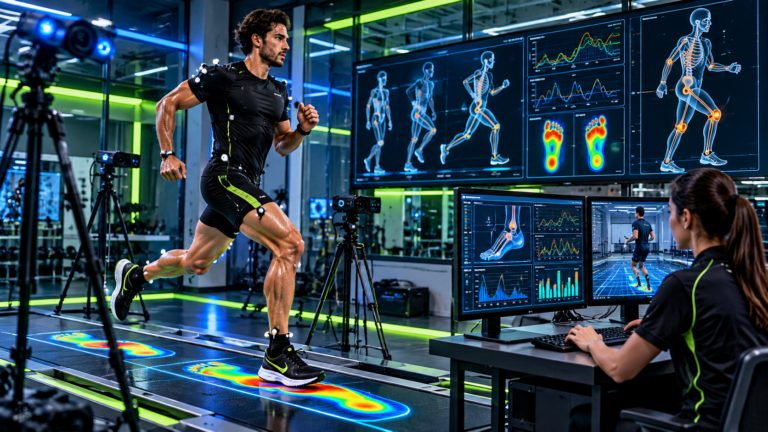
That makes DEXA relatively convenient compared with performance assessments such as VO2 max or gait analysis.
You do not need to run to exhaustion or perform repeated exercise stages.
For most body-composition scans, you simply lie still while the scanner arm passes over the body.
What Should You Wear?
Clothing matters because metal can interfere with the scan.
George Washington University recommends athletic or comfortable clothing without metal components such as buttons or zippers and asks users to remove jewelry and other accessories.
Simple workout clothing is usually a good choice.
If you want to compare repeated scans over time, wearing similar clothing each time can also help keep the process consistent.
How Should You Prepare for a DEXA Body Composition Scan?
Follow the exact instructions from the provider you choose.
Preparation requirements are not identical everywhere.
George Washington University recommends avoiding vigorous exercise for at least 12 hours before testing, avoiding heavy meals for several hours, wearing metal-free clothing and using the restroom shortly before the scan.
The reason for consistent preparation is simple: body composition measurements can be influenced by short-term factors such as hydration, food intake and exercise.
If you are using DEXA to track progress, consistency becomes especially important.
Try to repeat scans under similar conditions.
Is DEXA More Accurate Than a Smart Scale?
For serious body-composition tracking, DEXA generally provides much more information than a typical home scale.
Smart scales often use bioelectrical impedance analysis, or BIA. A small electrical current passes through the body, and an algorithm estimates body composition.
BIA can be convenient because you can use it frequently at home.
But the result can change with hydration, recent food intake, exercise and other conditions.
DEXA uses a different technology and can provide regional measurements in addition to whole-body estimates.
George Washington University describes its DXA service as providing total and regional composition and cites an accuracy range of approximately ±2% for its system.
That does not mean every DEXA measurement is perfect.
No body-composition method should be treated as an exact measurement of every cell in the body.
The most useful approach is often to focus on trends.
Is DEXA Better Than a BOD POD?
A BOD POD estimates body composition using air displacement plethysmography rather than X-rays.
It can be cheaper.
Colorado State University currently lists its BOD POD assessment at $75, compared with $210 for DEXA.
HSS lists a BOD POD assessment at $175.
BOD POD can be a useful option when you mainly want fat mass and fat-free mass.
DEXA is more attractive when you want regional information about different parts of the body.
For athletes, that regional breakdown can be useful when monitoring lean mass in the legs or comparing left and right sides.
The better choice depends on what information you actually need.
Is DEXA Useful for Runners?
It can be, especially when used carefully.
A runner may want to track whether changes in training and nutrition are affecting lean mass or fat mass.
This can be useful during strength-training phases, return-to-training periods or major changes in training volume.
But body fat percentage should not become the only performance target.
A lower number is not automatically better.
Running performance depends on many factors including aerobic fitness, threshold, running economy, strength, speed, recovery and training consistency.
Chasing body-composition changes too aggressively can harm training quality.
The DEXA report should be treated as one part of the picture, not a scoreboard.
Is DEXA Useful for Sprinters?
Sprinters may find lean-mass tracking especially interesting because strength and power are central to sprint performance.
Regional muscle estimates can help show whether body-composition changes are occurring in the lower body.
But a DEXA scan cannot tell you whether you are producing more force, accelerating faster or reaching a higher maximum velocity.
That requires other forms of performance testing.
For a sprinter, DEXA works best when combined with practical performance information such as sprint times, gym strength, jump testing or speed measurements.
Can DEXA Tell You How Many Calories to Eat?
Not directly.
Some DEXA reports include an estimated resting metabolic rate, but this is not the same as directly measuring resting metabolism.
UC Davis explains that its DXA report can provide an RMR estimate derived from body tissues.
If you want a direct metabolic assessment, a separate resting metabolic rate test may be more appropriate.
George Washington University offers a DXA plus RMR package for this reason.
Think of DEXA as a body-composition measurement tool, not a complete nutrition prescription.
How Often Should You Get a DEXA Scan?
For many athletes, scanning too often is unnecessary.
Body composition does not normally change enough from week to week to justify repeated paid testing.
A scan every few months may make more sense if you are monitoring a meaningful training or nutrition phase.
George Washington University offers multi-scan packages, which suggests repeat testing is commonly used for longer-term tracking rather than daily or weekly monitoring.
The best interval depends on your goal.
If your objective is to measure a 12-week strength program, a baseline and follow-up scan may be enough.
If you are not going to change anything based on the result, repeating the scan may not provide much value.
Is DEXA Radiation Dangerous?
DEXA uses ionizing radiation, so it should not be described as radiation-free.
However, body-composition DXA uses a low radiation dose.
George Washington University says its scan uses less than 1% of the radiation exposure of a traditional chest X-ray.
Older FDA documentation for body-composition-capable densitometers also describes very low exposure compared with common background and imaging exposures.
Even though the dose is low, providers still have safety rules.
For example, George Washington University says people who may be pregnant or are breastfeeding are not eligible for its DXA body-composition testing because the scan uses X-rays.
Always follow the provider’s screening instructions.
Why Can Two DEXA Scans Give Different Results?
Short-term differences do not always mean you gained or lost real tissue.
Hydration, glycogen levels, food intake, recent exercise and testing conditions can influence body-composition readings.
Different machines and software can also produce slightly different results.
That is why repeat testing is most useful when you use:
the same facility, the same machine when possible, a similar time of day, similar hydration and similar pre-test conditions.
The goal is not to eliminate every source of variation.
It is to make the comparison as consistent as practical.
How to Choose a DEXA Testing Center
Do not choose by price alone.
Ask whether the service is intended for body composition or diagnostic bone-health assessment.
Ask what the report includes.
Ask whether regional lean mass and visceral fat are reported.
Ask whether a professional reviews the results with you.
Ask whether repeat testing discounts are available.
Ask about preparation instructions before paying.
You should also ask whether the provider uses the same equipment and protocol for follow-up scans.
Those details matter more when your goal is long-term progress tracking.
DEXA Scan Cost vs Value
A $95 scan can be excellent value if it gives you reliable baseline information and a useful explanation.
A $210 scan can also be worth the money if the provider offers a more detailed service or if that facility is more convenient and consistent for repeat testing.
The most expensive option is not automatically the best.
Value depends on whether the information changes a decision.
If your training is going well and you have no specific body-composition question, you may not need DEXA at all.
If you are making a structured change in nutrition or strength training and want objective before-and-after data, the test may be more useful.
Frequently Asked Questions
How much does a DEXA scan cost in 2026?
For performance-focused body-composition testing, current public examples include $95 at UC Davis, $200 at George Washington University and $210 at Colorado State University. Prices vary by provider, location and package.
Is DEXA covered by insurance?
Elective body-composition testing is often self-pay. Diagnostic bone-density testing ordered for medical reasons may have different insurance coverage. Medicare covers eligible bone mass measurements under specific conditions.
How long does the scan take?
The actual scan may take about 10 minutes, with a full appointment of roughly 30 minutes depending on the provider and results review.
Is DEXA better than a smart scale?
DEXA provides more detailed and regional body-composition information, while smart scales are cheaper and convenient for frequent home tracking.
Does DEXA measure visceral fat?
Many modern body-composition reports do. UC Davis and George Washington University both describe visceral-fat information as part of their body-composition services.
Is a body-composition DEXA the same as an osteoporosis scan?
Not necessarily. A sports-performance whole-body scan may not be intended to diagnose osteoporosis. UC Davis explicitly distinguishes its performance DXA from a diagnostic bone-density examination.
How often should athletes repeat a DEXA scan?
There is no universal schedule. Repeating after a meaningful training or nutrition block is usually more useful than scanning every few weeks.
Should runners try to lower body fat as much as possible?
No. Lower is not automatically better, and overly aggressive weight loss can interfere with training, recovery and health. Body-composition goals should be considered in the context of the individual athlete.
Why does DEXA scan cost vary?
DEXA scan cost varies because some providers offer a basic body composition scan, while others include professional interpretation, regional analysis, follow-up testing or additional metabolic assessments.
The Bottom Line
The DEXA scan cost in 2026 depends heavily on the type of service and provider.
Current public body-composition prices include $95 at UC Davis Sports Medicine, $200 at George Washington University and $210 at Colorado State University.
For athletes, the biggest advantage of DEXA is not simply getting a body-fat percentage.
It is the ability to look more closely at lean mass, fat mass, regional composition and changes over time.
But the scan is only useful when you interpret it in context.
A DEXA report cannot tell you whether your sprint mechanics are better, whether your threshold pace improved or whether your training program is optimal.
It is one measurement tool.
Use it to answer a specific question, compare results under consistent conditions and avoid treating one body-composition number as the definition of athletic success.