Lactate Threshold Test Cost in 2026: Price, Benefits & What to Expect
For endurance runners, cyclists and serious recreational athletes, lactate threshold testing can be one of the most practical performance assessments available. Unlike a simple fitness score, a lactate test is designed to show how your body responds as exercise intensity rises and when blood lactate begins increasing more rapidly.
That information can help define training zones, estimate sustainable race intensity and show whether endurance fitness is improving over time.
The question many athletes ask first is simple: how much does a lactate threshold test cost in 2026?
Current public pricing varies widely. UC Davis Sports Medicine lists an initial lactate profile test at $175, Colorado State University lists lactate threshold testing at $270, George Washington University lists a lactate threshold test at $165, Washington State University lists $85 for the general population, Bowling Green State University lists $100 for community members, and Black Hills State University lists blood lactate threshold testing at just $20.
Those prices show why there is no single national figure.
A university lab, a hospital performance center and a private sports-science service may all use the phrase “lactate threshold test,” but they may differ in equipment, appointment length, interpretation, reporting and whether consultation is included.
So instead of choosing by price alone, it is better to understand exactly what the test measures and what you receive.
What Is a Lactate Threshold Test?
During exercise, your muscles produce lactate as part of normal energy metabolism.
At lower intensities, your body can usually produce and clear lactate at a manageable rate. As exercise becomes harder, lactate concentration rises.
A lactate threshold test tracks that change.
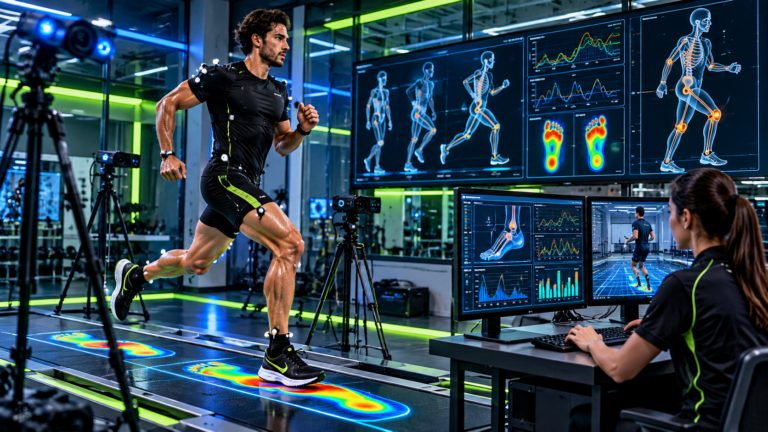
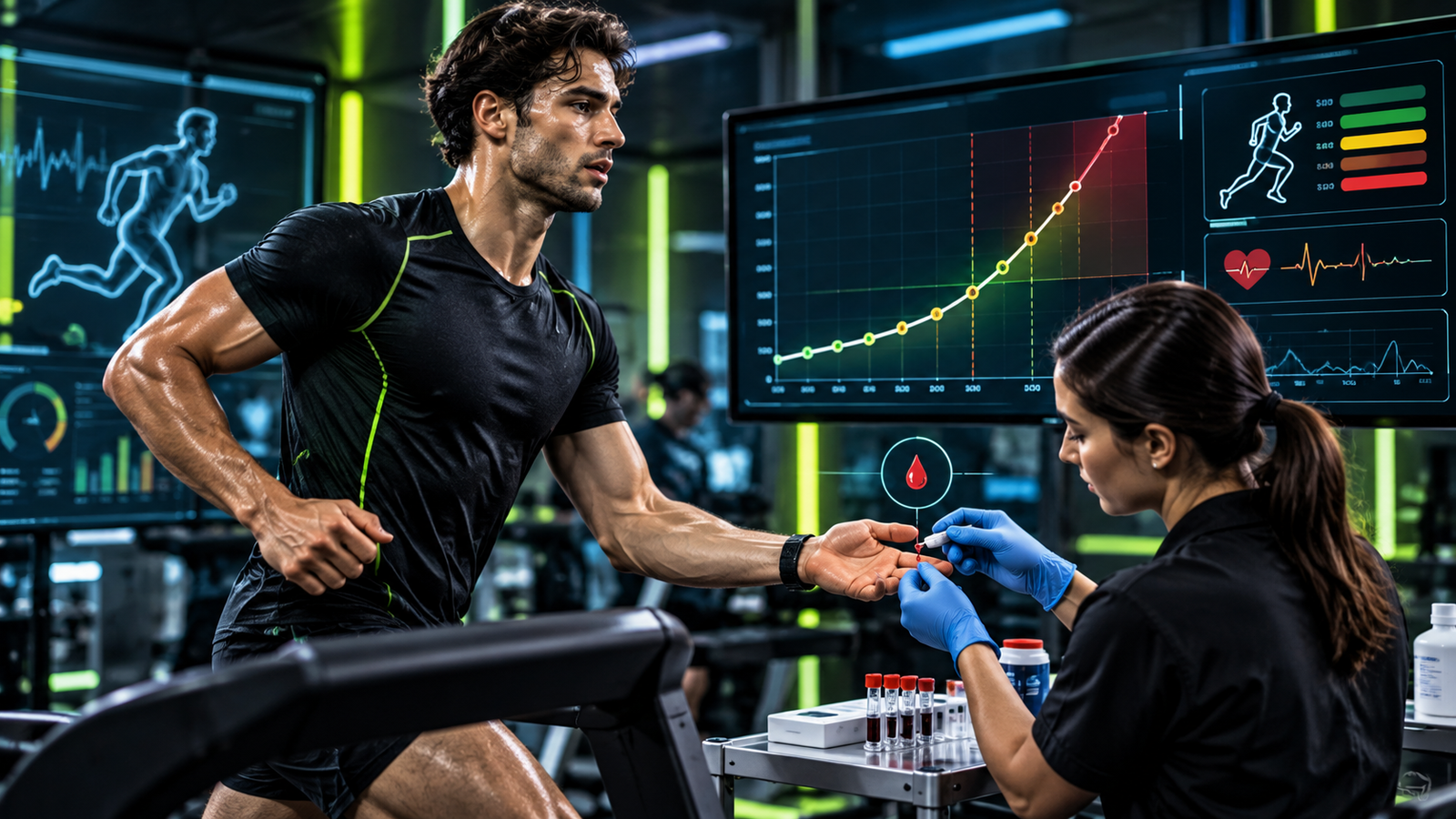
The athlete usually exercises in stages on a treadmill, stationary bike or other sport-specific machine. Intensity gradually increases, and small blood samples are taken at intervals.
These samples are often collected from a fingertip or earlobe.
Washington State University describes its lactate threshold protocol as progressively increasing exercise intensity while taking periodic finger-prick blood samples. UNM similarly explains that its test uses treadmill or bike stages and samples blood lactate throughout the session.
The resulting data can help estimate where lactate begins to rise more quickly.
That point can be useful for setting training intensities.
How Much Does a Lactate Threshold Test Cost in 2026?
There is a very large pricing range.
Here are current publicly listed examples:
- Black Hills State University: $20 for blood lactate threshold testing.
- Washington State University: $85 for the general population.
- Bowling Green State University: $100 for community members.
- Sacred Heart University: $160 for one lactate threshold test.
- George Washington University: $165.
- UC Davis Sports Medicine: $175 initial evaluation and $150 for subsequent tests.
- Colorado State University: $270.
Outside the U.S., pricing also varies. Plymouth Marjon University lists £125 standard pricing, while the University of Salford lists £190 for a standard report and £250 for an enhanced report.
These are examples, not a guaranteed average.
The actual lactate threshold test cost depends on where you live, whether the test is standalone or part of a package, and how much analysis is included.
Why Is There Such a Big Price Difference?
The biggest reason is that the service itself can be very different.
A lower-cost university lab may provide accurate testing but offer fewer consultation extras.
A higher-priced performance center may include:
- longer appointment time
- more experienced staff
- detailed interpretation
- personalized training zones
- written reports
- repeat-testing comparisons
- metabolic testing
- VO2 max testing
- exercise consultation
- running or cycling-specific protocols
UC Davis, for example, includes customized training zones and performance interpretation with its lactate profile service.
George Washington University says its test includes a personalized five-zone training model, associated heart rates and either running paces or cycling wattages, with a report sent after testing.
That additional interpretation can be more valuable than the blood-lactate number itself.
What Happens During a Lactate Threshold Test?
Most tests use a staged exercise protocol.
You start at a relatively easy intensity.
After several minutes, the treadmill speed, incline or cycling power increases.
At the end of each stage, the technician may record:
- heart rate
- perceived effort
- running speed
- cycling power
- blood lactate concentration
Then the next stage begins.
This continues until the test reaches its target intensity or the athlete can no longer continue comfortably or safely.
The University of Salford describes using roughly 8 to 10 exercise stages lasting at least three minutes each, becoming progressively harder.
UNM says its lactate threshold testing can last more than 20 minutes of exercise, which is often longer than a standard VO2 max test.
The complete appointment can take much longer because of preparation, warm-up, sampling, recovery and explanation.
George Washington University advises clients to expect roughly one hour for the entire session.
Does the Blood Sample Hurt?
The sample is usually small.
For most sports-performance testing, the technician uses a quick finger or earlobe prick rather than drawing a full vial of blood.
You may feel a brief sharp sensation.
Several samples may be required because the purpose of the test is to see how lactate changes across different exercise intensities.
If you dislike needles, ask the lab exactly how many samples it normally collects before you book.
What Results Do You Get?
A good lactate threshold test should give you more than a graph.
Depending on the provider, you may receive:
- lactate concentration at each workload
- estimated lactate threshold
- LT1
- LT2
- heart-rate zones
- running pace zones
- cycling power zones
- race-intensity guidance
- written report
- repeat-test comparison
- coaching recommendations
UC Davis says its lactate profile identifies LT1 and LT2 and provides training zones based on heart rate, speed or power.
This is one reason lactate testing appeals to endurance athletes.
It can connect physiological measurements to actual training decisions.
What Are LT1 and LT2?
You may hear professionals talk about two thresholds rather than one.
LT1 is generally associated with the first meaningful rise in blood lactate above lower-intensity levels.
It often corresponds broadly to the transition from very easy aerobic exercise toward moderate work.
LT2 represents a higher-intensity transition where lactate rises more sharply and sustainable duration becomes much shorter.
Different labs and coaches may use different models and terminology, so do not assume every provider defines thresholds in exactly the same way.
The important thing is consistency.
If you repeat testing, using the same lab and similar protocol makes comparisons easier.
Why Do Runners Care About Lactate Threshold?
A runner can have a high VO2 max and still struggle to sustain a fast pace.
That is because endurance performance depends on more than maximum oxygen uptake.
Lactate threshold helps describe how much of your capacity you can sustain.
Two runners with similar VO2 max values may have very different threshold speeds.
The athlete who can sustain a higher percentage of maximum capacity for longer may perform better in endurance races.
That is why threshold testing is often popular with:
- 5K runners
- 10K runners
- half-marathon runners
- marathon runners
- triathletes
- cyclists
- rowers
Colorado State University describes lactate threshold as a strong indicator of how long high-intensity exercise can be sustained.
Is Lactate Threshold Testing Useful for Sprinters?
For a pure 60m or 100m sprinter, lactate threshold is not usually the primary performance metric.
Short sprint performance depends much more on:
- acceleration
- maximum velocity
- force production
- power
- technique
- reaction
- speed endurance
However, lactate and metabolic conditioning can matter more as event duration increases.
A 400m runner, for example, deals with far more metabolic stress than a 100m specialist.
Athletes who combine sprinting with longer events may also benefit from endurance testing.
The value depends on the event.
This is an important Sprintaa principle: a test is useful only when it answers a question relevant to your sport.
Lactate Threshold Test vs VO2 Max Test
These tests are related but different.
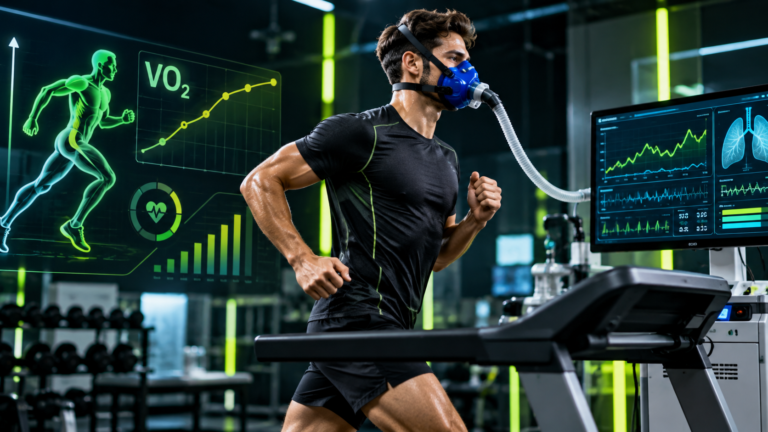
A VO2 max test focuses on maximum aerobic capacity.
A lactate threshold test focuses on how blood lactate changes across increasing workloads and where key thresholds occur.
VO2 max tells you more about your aerobic ceiling.
Lactate testing can tell you more about sustainable intensity.
For serious endurance athletes, both can be useful.
But if your budget is limited, the right choice depends on your goal.
If you want maximum aerobic capacity, VO2 max may be more relevant.
If you want training zones and sustainable race intensity, lactate threshold may provide more actionable information.
Can You Combine VO2 Max and Lactate Testing?
Yes, some labs offer combined testing.
But not all providers use the same protocol.
Black Hills State University lists a combined VO2 max and lactate threshold test at $50.
Bowling Green State University includes VO2 max and lactate threshold in larger athlete assessment packages priced at $230 to $250 for community members depending on protocol.
George Washington University, however, states that it prefers the tests separately for optimal results and offers bundled pricing at $275.
This shows that “combined testing” can mean different things.
Ask exactly how the protocol works.
Lactate Threshold Testing vs Ventilatory Threshold Testing
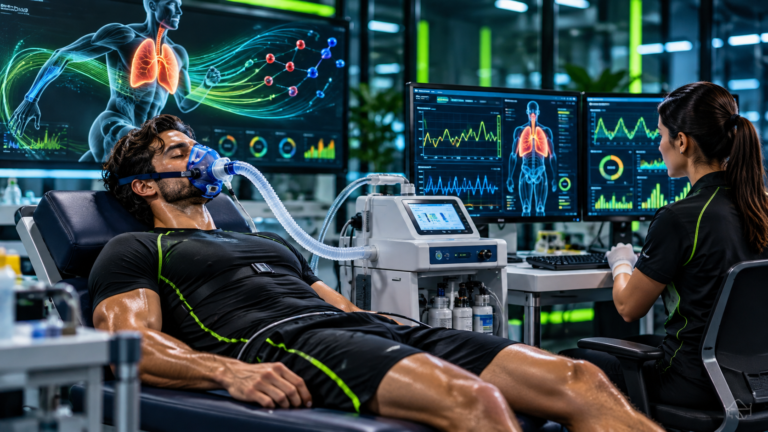
Ventilatory threshold is measured through breathing-gas data rather than blood lactate.
The two can provide related information about exercise intensity, but they are not identical measurements.
UC Davis lists VO2 max and ventilatory threshold testing separately from its lactate profile testing.
Some athletes prefer lactate testing because the results can be tied directly to blood lactate values.
Others may prefer metabolic testing because it avoids repeated blood sampling.
There is no universal best option.
Can a Smartwatch Measure Lactate Threshold?
Some advanced watches estimate lactate threshold.
These estimates can be useful for tracking trends.
But they are not the same as a laboratory blood-lactate test.
A smartwatch typically estimates threshold from combinations of:
- pace
- heart rate
- workout data
- GPS
- algorithmic modeling
A lab physically measures blood lactate.
For everyday training, wearable estimates may be good enough for many recreational runners.
For athletes who want a more direct physiological assessment, lab testing provides a different level of data.
Can You Estimate Lactate Threshold Without a Lab?
Yes.
Coaches often use field tests such as:
- 30-minute time trials
- race results
- critical speed tests
- sustained tempo efforts
- heart-rate-based threshold sessions
These methods do not directly measure blood lactate, but they can help estimate sustainable training intensity.
For many runners, field testing provides enough information to build useful training zones.
A lab test becomes more valuable when you want objective physiological data rather than a practical estimate.
What Affects Lactate Threshold Test Cost?
The lactate threshold test cost can increase when the appointment includes more than basic blood sampling.
Factors that can raise the price include:
Professional interpretation
A detailed consultation adds time and expertise.
VO2 max testing
Combined metabolic testing usually costs more.
Detailed reports
Enhanced reports can add cost.
Sport-specific equipment
High-performance treadmills, cycling ergometers and metabolic equipment can increase overhead.
Location
Large urban hospital systems may charge more than university labs.
Repeat testing
Some facilities offer reduced rates for follow-up sessions.
UC Davis, for example, lists $175 for an initial lactate profile and $150 for subsequent tests.
What Affects Lactate Threshold Test Cost?
Lactate threshold test cost can vary depending on the facility, testing protocol, staff expertise, report detail and whether VO2 max or other metabolic testing is included. A higher lactate threshold test cost does not always mean a better service, so athletes should compare what is included before booking.
Is Lactate Threshold Testing Covered by Insurance?
Most performance-focused lactate testing is typically sold as a self-pay service.
George Washington University explicitly states that it does not accept insurance for its lactate threshold test.
Bowling Green State University similarly requires payment before testing and does not list insurance as payment for its performance services.
Medical testing ordered for a clinical reason can be different.
If insurance matters to you, ask the provider before booking.
Do not assume a sports medicine facility automatically means the test is covered.
How Should You Prepare?
Follow the instructions provided by your lab.
Common recommendations include:
- arrive well hydrated
- avoid strenuous exercise for about 24 hours
- wear normal training clothes
- bring running or cycling shoes
- eat normally
- avoid arriving unusually fatigued
- bring water and a snack for afterward
George Washington University recommends being well fueled and hydrated and avoiding strenuous exercise for at least 24 hours before testing.
This matters because fatigue from a hard workout can change your performance.
If you plan to repeat the test later, try to reproduce similar pre-test conditions.
How Often Should You Repeat a Lactate Test?
Testing too frequently is usually unnecessary.
A meaningful training block needs time to create adaptation.
Many athletes might repeat the test after several months of consistent training.
The exact schedule depends on:
- training level
- competition calendar
- budget
- whether the result will change training decisions
Repeat testing can be useful because it shows whether your threshold pace, heart rate or power has improved.
That can be more meaningful than comparing yourself with another athlete.
What Does Improvement Look Like?
A successful endurance training block may result in:
- higher speed at the same lactate level
- higher power at the same lactate level
- lower lactate at a previously difficult workload
- higher threshold pace
- improved heart-rate efficiency
You do not necessarily need a dramatic change in one number.
Performance improvement is often about being able to do more work before fatigue-related markers rise sharply.
Is Lactate Threshold Testing Worth the Money?
For many endurance athletes, it can be.
The test may be especially worthwhile if you:
- train seriously
- race longer events
- want objective training zones
- enjoy data-driven coaching
- plan to repeat testing
- are unsure whether current zones are accurate
It may be less worthwhile if:
- you run casually
- you do not plan to use the results
- you already have useful field-test data
- the cost would take money away from more important training needs
A $200 test that changes nothing in your training has limited value.
A $100 test that helps you pace workouts correctly for six months may be much more valuable.
Questions to Ask Before Booking
Before paying, ask the lab:
What exactly is included in the price?
How many blood samples will be taken?
Is the test done on a treadmill or bike?
Will you identify LT1 and LT2?
Will I receive heart-rate or pace zones?
Do I get a written report?
How long does the appointment take?
Who interprets the results?
Can I repeat the same protocol later?
Is the test self-pay?
These questions make it much easier to compare providers.
Frequently Asked Questions
How much does a lactate threshold test cost?
Current public U.S. examples range from about $20 at some university labs to $270 at higher-priced performance facilities. Many publicly listed tests fall roughly between $85 and $175.
Does lactate threshold testing hurt?
It normally involves small finger or earlobe blood samples. You may feel brief discomfort from each sample.
How long does the test take?
Exercise may last around 20 to 30 minutes, but the full appointment can take about an hour depending on preparation and interpretation.
Is lactate threshold better than VO2 max?
Neither is universally better. They measure different parts of performance.
Can a smartwatch replace the test?
A smartwatch can estimate threshold and track trends, but it does not directly measure blood lactate.
Is lactate testing useful for marathon runners?
Yes. Threshold and training-zone information can be especially relevant for endurance events.
Do I need a lactate test to train well?
No. Many runners train successfully using race results, pace, heart rate and field tests.
Can beginners do lactate threshold testing?
Potentially, yes, assuming they pass the lab’s health screening and the test is appropriate for them.
Why does lactate threshold test cost vary so much?
Lactate threshold test cost varies because some facilities provide only basic blood-lactate testing, while others include detailed reports, training zones, professional consultation or combined metabolic testing.
The Bottom Line
The lactate threshold test cost in 2026 varies widely depending on the provider.
Current public U.S. examples range from $20 at Black Hills State University to $270 at Colorado State University, with other published prices including $85 at Washington State, $100 at Bowling Green State, $160 at Sacred Heart, $165 at George Washington University and $175 at UC Davis.