VO2 Max Test Cost in 2026: Price, Benefits & What to Expect
VO2 max has become one of the most talked-about numbers in running, cycling and endurance training. Smartwatches estimate it, fitness apps display it, and performance labs measure it directly while an athlete runs or cycles wearing a breathing mask.
That naturally leads to another question: how much does a VO2 max test cost in 2026, and is paying for a laboratory test actually worth it?
The answer depends heavily on where you test and what is included. Current published U.S. prices show a very wide range. UC Davis Sports Medicine lists an initial VO2 max and ventilatory threshold evaluation at $175. Shirley Ryan AbilityLab lists a VO2 max assessment at $180. Colorado State University lists its VO2 max test at $270, while Hospital for Special Surgery lists a 2026 VO2 max-only aerobic capacity test at $315. University and community labs can sometimes be much cheaper; Black Hills State University lists VO2 max cardiovascular testing at $40.
That spread is important. There is no single nationwide price for VO2 max testing. A low-cost university lab, a hospital sports-performance center and a premium metabolic testing service are not necessarily offering the same appointment length, equipment, consultation or follow-up.
So instead of asking only, “What does a VO2 max test cost?” it is better to ask, “What am I getting for the price?”
What Is a VO2 Max Test?
VO2 max refers to the maximum amount of oxygen your body can use during intense exercise.
It is generally expressed in milliliters of oxygen per kilogram of body weight per minute, often written as mL/kg/min. Cleveland Clinic describes VO2 max as a measure of how much oxygen the body can absorb and use while being pushed toward maximal effort.
A laboratory VO2 max test usually involves gradually increasing exercise intensity while your breathing is analyzed.
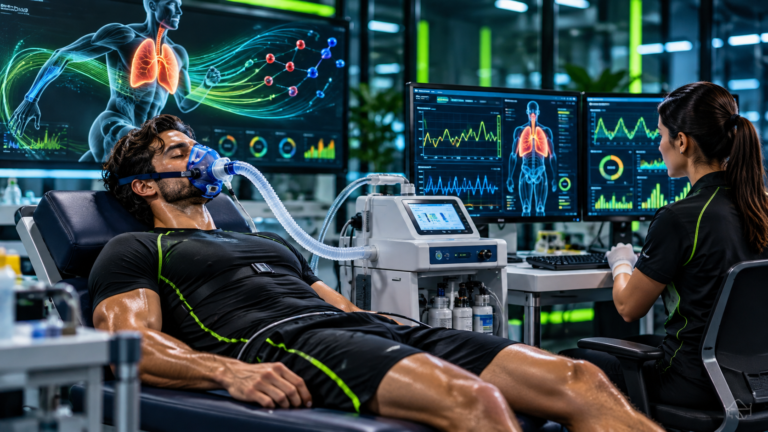
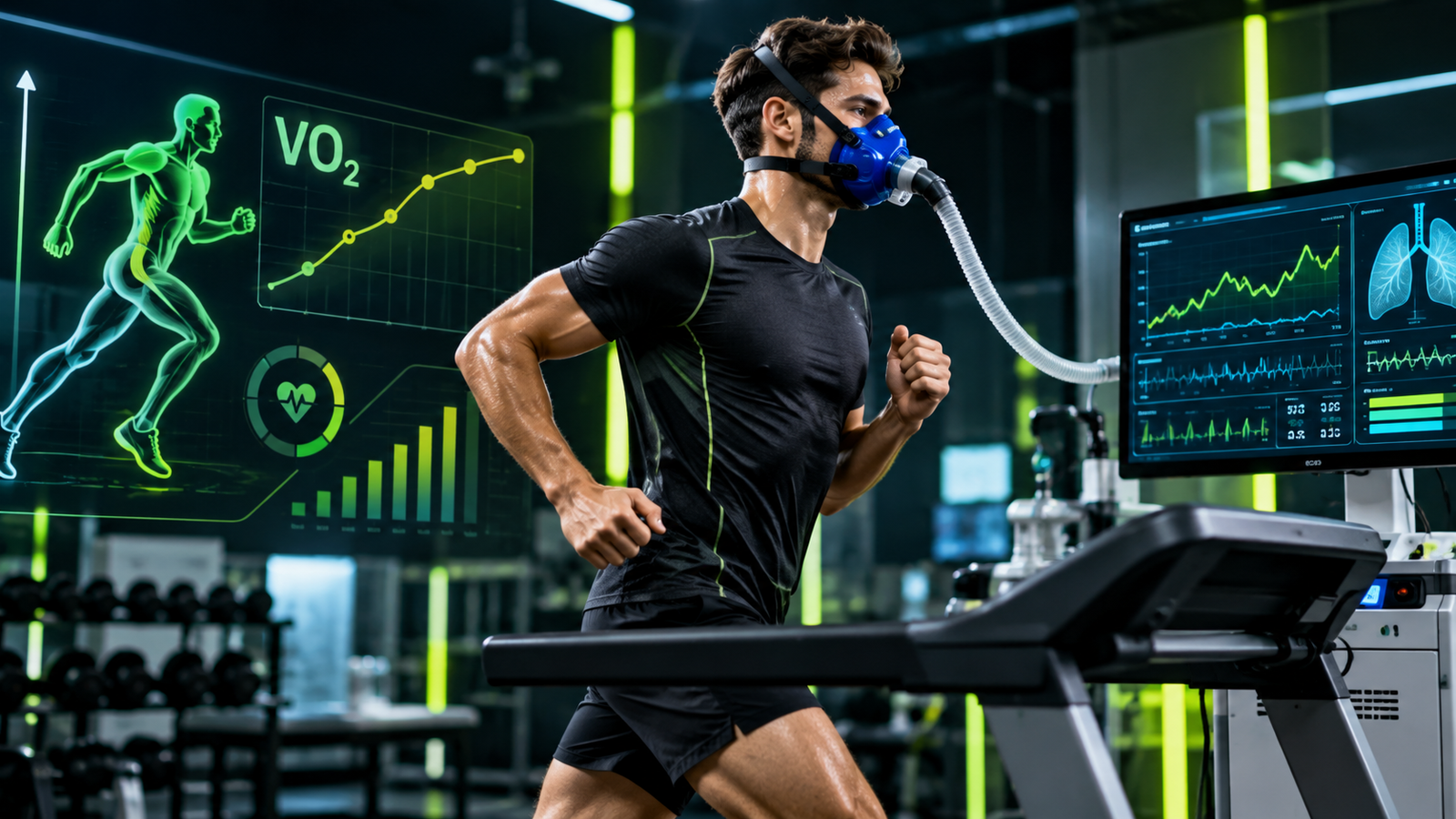
You may run on a treadmill or pedal a stationary bike while wearing a fitted mask or mouthpiece. The system measures the oxygen and carbon dioxide in the air you breathe. HSS explains that its metabolic testing uses a mask connected to a metabolic cart to measure physiological responses as exercise intensity increases.
That is very different from a smartwatch estimate.
A wearable can be useful for tracking trends, but a laboratory test directly measures respiratory gases rather than estimating VO2 max from pace, heart rate and other data.
How Much Does a VO2 Max Test Cost in 2026?
The current published prices below show how much variation exists.
UC Davis Sports Medicine lists an initial VO2 max and ventilatory threshold evaluation at $175, with repeat testing at $150. The assessment includes physiological analysis and a training consultation.
Shirley Ryan AbilityLab in Chicago lists a VO2 max assessment at $180, with an appointment that includes briefing, testing, recovery and a review of results.
Colorado State University’s Human Performance Clinical Research Laboratory lists a VO2 max test at $270.
Hospital for Special Surgery lists its 2026 Aerobic Capacity Test (VO2 Max only) at $315. Its broader full metabolic profile, which includes VO2 max plus lactate and metabolic-efficiency testing, is listed at $470.
At the lower end, Black Hills State University lists VO2 max cardiovascular testing at $40, showing that university exercise-science laboratories can sometimes offer much lower pricing than hospital-based performance centers.
UNC Asheville lists community-member pricing of $140 for a VO2 max test and $300 for combined VO2 max and lactate threshold testing.
These are examples, not a national pricing rule. Providers can update prices, and some programs offer discounts to students, members, employees or returning clients.
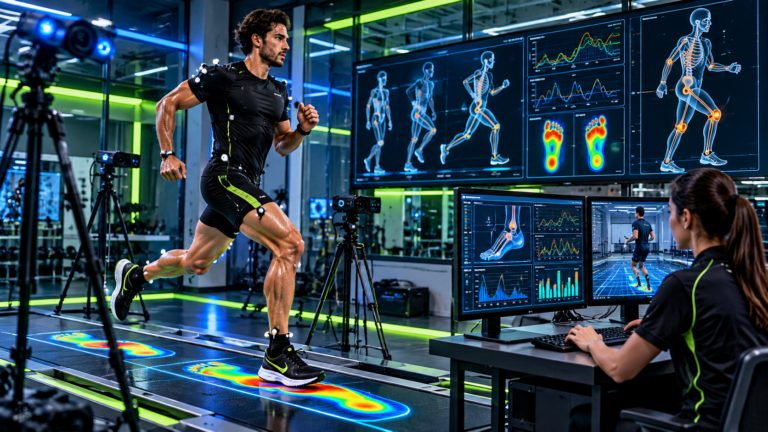
If you are also interested in running mechanics, read our guide to running gait analysis cost in 2026.
A realistic price expectation
For a general public client in the United States, a professional VO2 max test may often fall somewhere between roughly $100 and $300+, depending on the facility and level of service.
But you should not treat that range as a guaranteed average.
Instead, compare the actual service.
A $175 test that includes ventilatory thresholds and a training consultation may provide more practical value than a cheaper test that gives only one number.
Likewise, a $315 hospital-based test may appeal to someone who values a more specialized performance environment.
Why Does VO2 Max Testing Cost So Much?
A proper laboratory VO2 max test requires more than a treadmill.
The facility needs metabolic equipment capable of analyzing breathing gases. Staff must prepare and calibrate the equipment, screen the participant, supervise a maximal exercise test, monitor the data and interpret the results.
The price may also reflect:
- appointment length
- staff qualifications
- treadmill or cycle testing
- metabolic cart technology
- heart-rate monitoring
- ventilatory-threshold analysis
- written reports
- training-zone recommendations
- follow-up consultation
- repeat-test comparisons
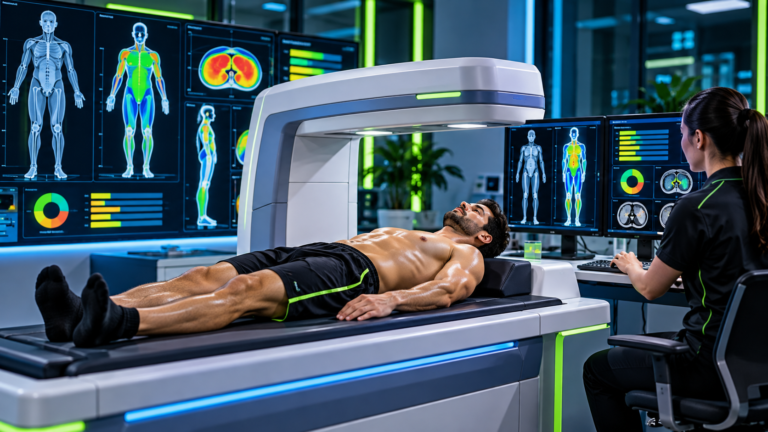
Some performance centers bundle VO2 max with lactate testing, body composition, resting metabolic rate or running economy.
That can raise the price significantly, but it also changes the service you are buying.
VO2 Max Test vs Full Metabolic Testing
This is one of the most important distinctions to understand.
A VO2 max-only test is primarily designed to determine maximal aerobic capacity.
A full metabolic profile may include additional information such as:
- ventilatory thresholds
- lactate profile
- running or cycling economy
- metabolic efficiency
- calorie expenditure
- fuel use
- individualized training zones
HSS, for example, separates its $315 VO2 max-only test from its $470 full metabolic profile. The full profile adds lactate, threshold and metabolic-efficiency information.
For an athlete training seriously for endurance performance, the additional threshold data may sometimes be more useful than VO2 max alone.
A high VO2 max can tell you something important about aerobic capacity, but it does not tell the entire story of race performance.
What Happens During a VO2 Max Test?
Exact protocols differ, but most laboratory tests follow the same basic idea.
You begin exercising at a manageable intensity.
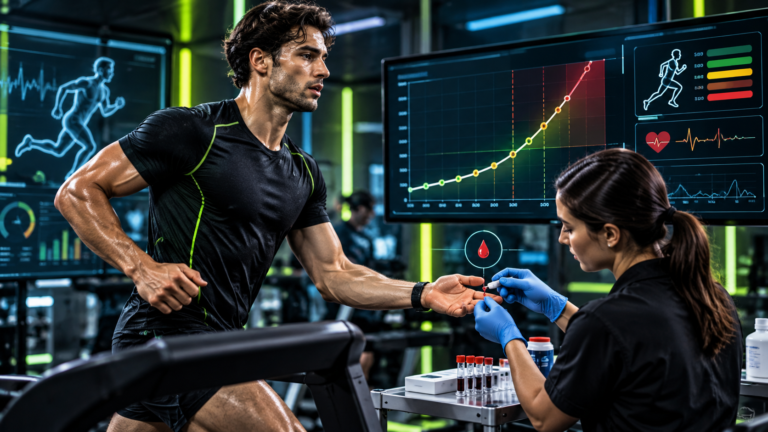
The treadmill speed, incline or cycling resistance gradually increases.
You continue until the test reaches the required endpoint or you cannot safely maintain the workload.
During the test, your breathing is analyzed continuously.
The mask may feel unusual at first, but it allows the system to measure oxygen consumption and carbon dioxide production.
HSS describes its exercise testing as using a tightly fitted mask connected to a metabolic cart, with protocols selected based on fitness level, training history and the type of service.
A maximal test becomes difficult.
Expect heavy breathing, elevated heart rate and significant fatigue near the end.
Weber State University notes that during maximal aerobic testing participants can experience breathlessness, rapid heart rate, fatigue, muscle soreness and lightheadedness, and can stop the test if necessary.
That is why professional supervision and appropriate screening matter.
How Long Does VO2 Max Testing Take?
The hard exercise portion may be relatively short, but the complete appointment can be much longer.
Shirley Ryan AbilityLab says to plan for about 60 minutes for its appointment, including briefing and post-test review.
HSS says metabolic-testing appointments may involve substantially more total time than the intense exercise portion because there is preparation, testing, interpretation and discussion.
So when comparing the VO2 max test price, ask whether the listed cost includes:
- intake and medical screening
- warm-up
- actual test
- cool-down
- data analysis
- consultation
- written report
A cheaper 20-minute appointment and a 90-minute performance consultation are not equivalent services.
What Results Do You Get?
At minimum, you should expect a VO2 max result.
But a good lab may provide much more.
Depending on the service, you may receive:
- absolute VO2 max
- relative VO2 max
- peak heart rate
- ventilatory thresholds
- heart-rate training zones
- pace zones
- cycling power zones
- energy expenditure
- comparison with age-related reference values
- recommendations for training
UC Davis says its testing can identify VO2 max, ventilatory thresholds and personalized heart-rate, pace and power zones.
Shirley Ryan AbilityLab says results can be compared with age-predicted norms and used to set future goals.
This is why it is worth asking in advance whether you get only a number or a useful explanation.
Lab VO2 Max vs Smartwatch VO2 Max
Many runners already have a VO2 max number on their watch.
So why pay for a lab test?
The difference is measurement versus estimation.
A laboratory test directly analyzes respiratory gases during controlled exercise.
A smartwatch generally uses algorithms based on heart rate, speed, GPS and other signals to estimate VO2 max.
HSS notes that wearables can provide useful estimates, especially for following trends over time, but laboratory measurement is the more direct way to determine VO2 max.
That does not make smartwatch data useless.
For everyday training, a consistent wearable may be very useful because you can collect data repeatedly without paying for another lab visit.
The strongest use of a smartwatch VO2 max estimate may be trend tracking.
If the same device shows your estimated value gradually improving across months of consistent training, that can still be informative even if the number does not exactly match a laboratory test.
Is an At-Home VO2 Max Estimate Free?
Potentially, yes.
Some watches and fitness platforms provide estimated VO2 max as part of their normal features.
You can also use field tests such as timed runs or shuttle tests to estimate aerobic fitness.
Cleveland Clinic notes that field approaches such as shuttle runs, 12-minute runs or cycling protocols can provide rough VO2 max estimates when laboratory testing is not available, but they are less precise than direct testing.
That makes field testing a useful option for runners on a budget.
You could perform the same field test under similar conditions every several weeks and track improvement.
For many recreational runners, that may be enough.
Is VO2 Max Testing Worth It for Runners?
It depends on your goal.
For a runner who wants one interesting fitness number, paying several hundred dollars may not be necessary.
For an athlete who wants objective baseline data, personalized training zones or a repeatable measure of aerobic development, the test may provide more value.
VO2 max testing can be especially useful when you want to:
- establish an aerobic-fitness baseline
- compare changes across a training block
- identify ventilatory thresholds
- personalize heart-rate or pace zones
- understand whether aerobic capacity is a likely limiter
- combine the result with other performance testing
But VO2 max should not become the only metric you care about.
Two runners can have similar VO2 max values and very different race performances.
Economy, threshold, durability, technique, training consistency and event-specific preparation all matter.
VO2 Max and Sprinting
Sprintaa focuses heavily on speed, so an important question is whether VO2 max matters to sprinters.
For short sprint races such as 60m or 100m, maximal aerobic capacity is not the main performance factor.
Acceleration, maximum velocity, strength, power and technique are far more event-specific.
However, aerobic fitness still contributes to general conditioning, recovery between training efforts and the ability to tolerate certain types of training.
For 400m athletes and runners who combine sprinting with longer events, aerobic capacity becomes increasingly relevant.
The key is context.
A sprinter should not assume that raising VO2 max automatically raises top speed.
Likewise, a marathon runner should not assume that top sprint speed tells the whole endurance story.
VO2 Max Test vs Lactate Threshold Test
These two tests are often sold together, but they measure different things.
VO2 max looks at your maximum aerobic capacity.
Lactate threshold testing examines how lactate changes as exercise intensity increases and can help identify sustainable training or racing intensities.
For endurance athletes, threshold information can be extremely actionable.
That is why some facilities offer combined packages.
UNC Asheville lists its combined VO2 max and lactate threshold test at $300 for community members, while its VO2 max-only test is $140.
Black Hills State lists a combined VO2 max and lactate threshold test at $50 versus $40 for VO2 max alone.
The price difference depends on the facility.
If your main goal is to build training zones for endurance competition, ask the lab whether threshold testing is included before booking.
VO2 Max Test vs Resting Metabolic Rate Test
These are completely different assessments.
A VO2 max test evaluates aerobic capacity during exercise.
A resting metabolic rate test estimates how much energy your body uses at rest.
HSS lists these as separate services, with its 2026 resting metabolic rate assessment priced at $210 and VO2 max-only testing at $315.
Do not book an RMR test expecting it to measure running fitness.
Similarly, do not book a VO2 max test expecting a full nutrition analysis unless that service is specifically included.
What Should You Do Before a VO2 Max Test?
Follow the exact instructions from your testing center.
Common recommendations include arriving rested, wearing proper exercise clothing, avoiding hard training beforehand and paying attention to food, hydration and caffeine.
Shirley Ryan AbilityLab advises participants to avoid strenuous exercise for 24 hours before testing, avoid heavy meals for two to three hours, arrive hydrated and avoid caffeine on the day of testing.
Weber State similarly recommends being well-rested and avoiding exercise for 24 hours before maximal testing.
These instructions matter because fatigue, hydration and recent training may affect test performance.
If your goal is to compare two tests months apart, try to reproduce similar pre-test conditions.
Who Should Not Automatically Do a Maximal Test?
A maximal exercise test pushes you toward very high effort.
That makes screening important.
Some facilities require health-history paperwork, physician clearance or other medical screening depending on age, symptoms or risk factors.
If you have known cardiovascular disease, unexplained chest pain, fainting, major respiratory problems or other health concerns, do not treat a commercial performance test as a substitute for medical evaluation.
Tell the testing provider about relevant health conditions and medications.
The lab should be able to explain its screening requirements before you pay.
Does Insurance Cover VO2 Max Testing?
A sports-performance VO2 max test is often offered as a self-pay service.
Insurance coverage can differ when cardiopulmonary exercise testing is ordered for a medical reason, but that is different from booking an elective performance test.
Do not assume that your health plan will reimburse a performance assessment.
Before booking, ask:
- Is this a performance service or medical diagnostic test?
- Is it self-pay?
- Is physician referral required?
- Can the provider supply billing codes?
- Should I contact my insurer?
That one conversation can prevent an unexpected bill.
How Often Should You Repeat VO2 Max Testing?
There is no universal schedule.
Testing every few weeks is usually unnecessary for recreational athletes because meaningful aerobic adaptations take time and normal measurement variability exists.
Cleveland Clinic notes that small changes can sometimes reflect normal variability, and it is more useful to repeat tests under similar conditions and protocols.
For a serious endurance athlete, repeat testing might make sense after a substantial training block.
For a recreational runner, once or twice a year may provide all the information needed.
The best schedule depends on whether you are actually going to use the result to change training decisions.
How to Choose a VO2 Max Testing Center
Do not choose a lab solely because its website looks impressive.
Ask practical questions.
Who supervises the test?
Look for appropriate exercise physiology, sports medicine or related qualifications.
Do you test runners on a treadmill?
Cycling VO2 max can differ from running-specific testing.
Does the test include ventilatory thresholds?
Will I receive training zones?
Do I get a written report?
How long does the appointment take?
Is follow-up interpretation included?
Can I repeat the same protocol later?
What is the full VO2 max test cost?
A test becomes far more valuable when the result is explained in language you can use.
Is the Most Expensive VO2 Max Test the Best?
No.
Price is partly a reflection of facility type, location, staffing and the amount of analysis included.
A lower-cost university exercise-science lab may still use valid metabolic equipment and provide useful results.
A premium sports-performance center may provide a more polished consultation and more comprehensive testing.
The right option is the one that matches your goal.
If you only want a direct VO2 max measurement, paying for a large performance package may be unnecessary.
If you want lactate thresholds, metabolic efficiency, body composition and individualized consultation, a larger package may make more sense.
How to Get More Value From Your Test
Before you arrive, decide what you want to know.
Instead of saying, “I want my VO2 max,” ask a more useful question:
- Are my current heart-rate zones realistic?
- Is aerobic capacity likely limiting my endurance?
- How should my easy and threshold training intensities differ?
- Has my aerobic fitness improved since my last training block?
- Should I focus more on raising VO2 max or improving threshold?
Bring recent training information.
Know your typical weekly running volume, recent race times and current goals.
The better the context, the easier it is for the professional to make the numbers useful.
Frequently Asked Questions
What is the average VO2 max test cost in 2026?
There is no single national average. Current public U.S. examples range from about $40 at some university labs to $315 at a premium hospital-based performance center, with many public-facing services falling in the $140–$270 range.
Is a $300 VO2 max test worth it?
It may be if the test includes high-quality direct measurement, professional interpretation and useful training guidance. If you only want a rough fitness estimate, a wearable or field test may be enough.
How accurate is a smartwatch VO2 max?
A smartwatch estimates VO2 max rather than directly measuring respiratory gases. Wearables can still be useful for tracking trends over time, especially when you use the same device consistently.
Is VO2 max testing painful?
The test itself is not normally painful, but maximal exercise is uncomfortable. Expect heavy breathing and fatigue near the end.
Can beginners take a VO2 max test?
Yes, depending on health status and the facility’s screening rules. Some providers also offer submaximal testing for people who do not want or need maximal effort.
Does a higher VO2 max mean I am a faster runner?
Not necessarily. VO2 max is one part of endurance performance. Threshold, running economy, technique, training history and event demands also matter.
Should I choose treadmill or bike testing?
If running is your primary sport, treadmill testing may be more specific. Cyclists may prefer a cycle ergometer. Ask the lab which protocol is most appropriate.
Can VO2 max testing tell me my training zones?
Many performance labs use the test to provide heart-rate, pace or power zones, especially when ventilatory thresholds are measured. UC Davis specifically includes individualized zones in its VO2 max testing service.
The Bottom Line
The VO2 max test cost in 2026 varies widely because the phrase can describe anything from a low-cost university exercise-science test to a comprehensive hospital-based metabolic performance assessment.
Current public pricing examples include $40 at Black Hills State University, $140 at UNC Asheville, $175 at UC Davis, $180 at Shirley Ryan AbilityLab, $270 at Colorado State University and $315 for HSS’s VO2 max-only test.