Advanced Gait Analysis Cost in 2026: Equipment, Systems & Test Prices
Advanced gait analysis has moved far beyond a coach watching someone run on a treadmill.
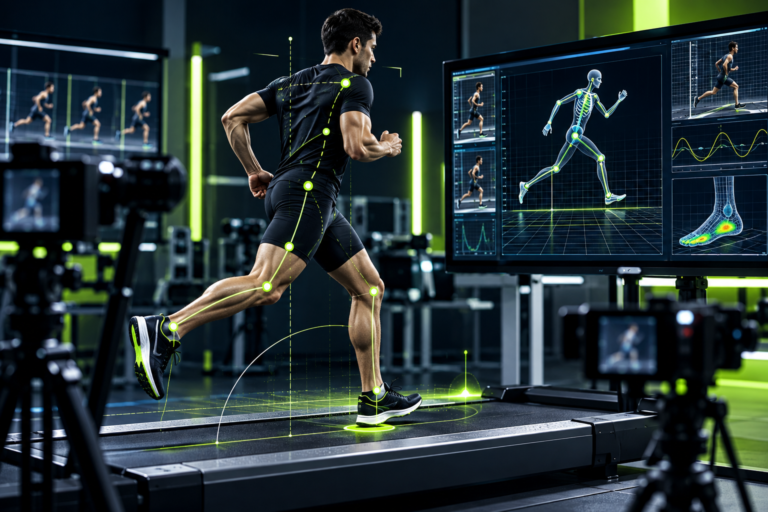
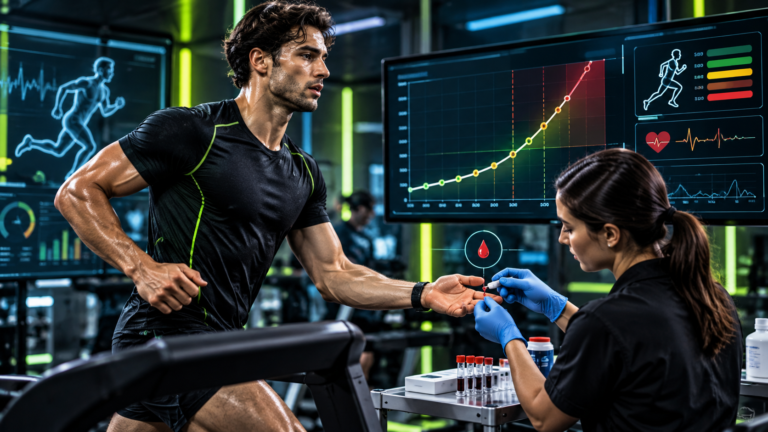
Today, a gait assessment may use high-speed cameras, pressure-sensitive walkways, force plates, wearable sensors, 3D motion capture, markerless artificial intelligence or a combination of several technologies.
That increased sophistication creates an obvious question for athletes, clinics and sports-performance professionals:
How much does advanced gait analysis cost in 2026?
There are really two different answers.
The first is the cost to the athlete or patient for an assessment.
The second is the gait analysis equipment price paid by a clinic, university, running store or research laboratory.
Those numbers can be dramatically different.
A runner may pay around $50 for a retail video analysis, while a professional clinic may invest thousands—or tens of thousands—of dollars in pressure systems, force platforms and advanced motion-analysis equipment.
A 2026 peer-reviewed review of gait-analysis technologies notes that traditional laboratory approaches using motion capture and force plates can provide detailed measurements but are limited by high cost and lack of portability. That same pressure is helping drive growth in wearable and lower-cost gait technologies.
Understanding the difference between these systems is important because the phrase “advanced gait analysis” can refer to very different services.
What Is Advanced Gait Analysis?
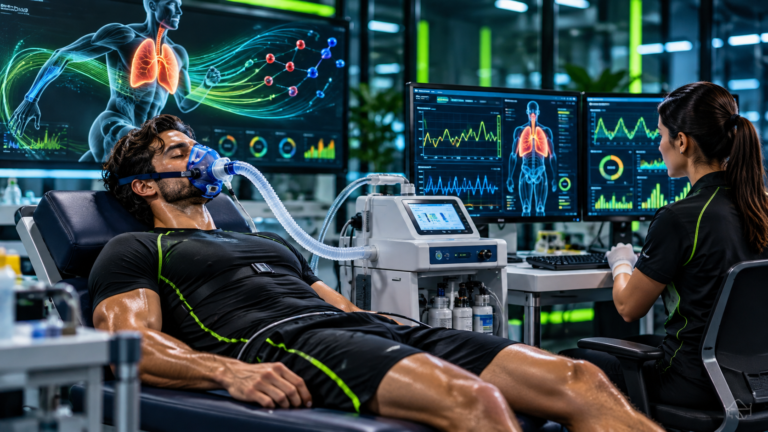
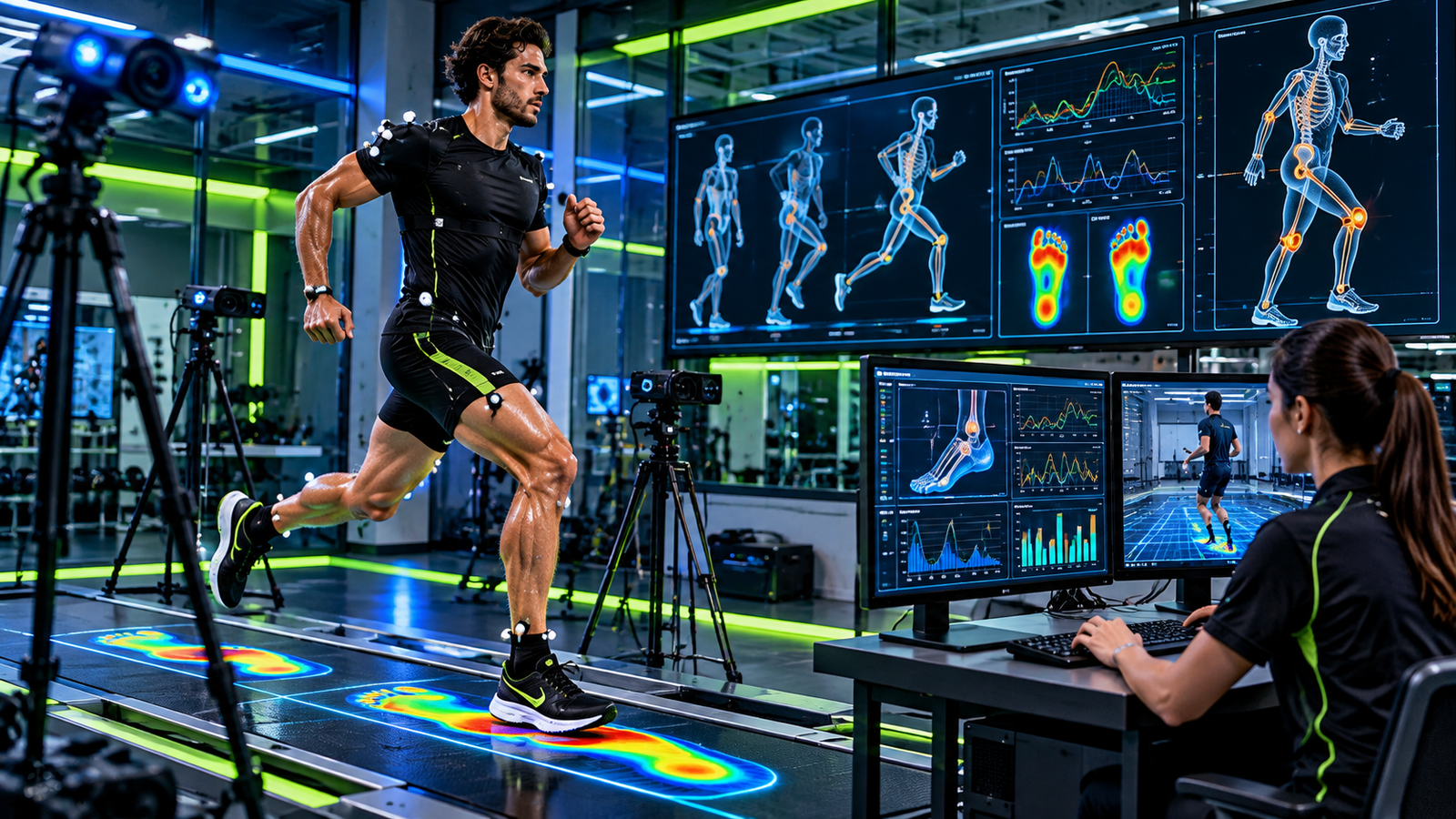
Advanced gait analysis is the detailed measurement of how a person walks or runs.
A basic assessment may use video.
An advanced assessment may measure:
- stride length
- cadence
- step time
- stance time
- joint angles
- ground reaction forces
- plantar pressure
- left-right asymmetry
- foot progression
- center of pressure
- acceleration
- movement in three dimensions
The exact data depends on the equipment being used.
A pressure walkway, for example, focuses heavily on how the foot interacts with the ground.
A 3D motion-capture system can examine full-body joint movement.
A force plate measures forces applied to the ground.
Wearable inertial sensors can track movement outside a traditional laboratory.
That means the most expensive system is not automatically the best system.
The correct system is the one that measures the information actually needed.
How Much Does Advanced Gait Analysis Cost for a Runner?
For an individual runner, prices depend on the level of testing.
At the lower end, Fleet Feet Greenville currently lists an in-store running gait analysis at $50. The service uses running video and examines factors such as stride and foot movement.
In the UK, The Gait Clinic currently lists Advanced Gait Analysis at £135.
MacFarlane Physiotherapy lists a 60-minute Run3D gait analysis at £175 and a 90-minute advanced Run3D assessment at £295.
These examples show the wide difference between retail screening and advanced clinical testing.
A $50 store service may be useful for form and footwear feedback.
A longer clinical assessment may include a physical examination, detailed biomechanical data, rehabilitation planning and professional interpretation.
So when comparing advanced gait analysis cost, do not compare prices without comparing what is included.
What Affects Advanced Gait Analysis Cost?
Several factors influence price.
Technology
A simple high-speed camera setup costs less to operate than a full 3D motion-capture laboratory.
Appointment Length
A 20-minute screen and a 90-minute biomechanical assessment are different services.
Professional Expertise
Testing performed by a specialist physical therapist, podiatrist, biomechanist or sports scientist may cost more because interpretation is part of the service.
Written Reports
A detailed report with joint angles, force data and recommendations takes more professional time to prepare.
Multiple Technologies
Some labs combine:
- video
- pressure mapping
- force plates
- 3D motion capture
- EMG
- strength testing
That usually increases the price.
Follow-Up
Some assessments include follow-up appointments or exercise programming.
Others charge separately.
Gait Analysis Equipment Price: Why the Range Is So Large
This is where the topic becomes especially interesting.
There is no single “gait analysis machine.”
Equipment can range from a relatively inexpensive educational force plate to a highly integrated rehabilitation platform costing tens of thousands of dollars.
Professional manufacturers also frequently use request-a-quote pricing rather than publishing prices online.
Tekscan, for example, offers several gait-analysis systems including its F-Scan in-shoe system and modular Strideway pressure walkway, but directs buyers to contact the company for configuration and pricing rather than displaying a simple retail price.
This is common because system price depends on:
- number of sensors
- walkway length
- software
- cameras
- support
- training
- installation
- research modules
- synchronization options
So a clinic should be cautious when comparing a single online price against a customized professional quote.
Pressure Walkway Cost
Pressure-sensitive walkways measure what happens underneath the feet while a person walks or runs.
They can quantify:
- plantar pressure
- contact time
- step length
- left-right differences
- center of pressure
- loading patterns
One publicly listed professional example is the Wintrack Walkway sold by Algeos.
Its current listed price is approximately £10,474.76 excluding VAT, or £12,569.71 including VAT. The system contains thousands of sensors and records pressure data during walking.
That price helps explain why a comprehensive clinic assessment costs more than a basic phone-video analysis.
The provider is not only charging for 60 minutes of staff time.
They may also be operating expensive equipment that requires software, maintenance and training.
Force Plate Cost
Force plates measure the forces a person applies to the ground.
They are widely used in sports science, rehabilitation and biomechanics.
Prices differ enormously depending on the plate.
At the educational end, Vernier currently sells a Go Direct Force Plate for $599. It can measure forces during movements such as stepping and jumping, but it should not be confused with a complete clinical gait laboratory.
At the professional performance end, Axioforce currently lists:
- Launch Pad Lite: $10,000
- Launch Pad: $11,000
- Launch Pad XL: $16,000
These systems are designed for higher-level human performance measurement.
A clinic may also use two plates together, increasing the hardware cost further.
This demonstrates why “force plate price” alone is not enough.
You must ask what the system is designed to measure.
Advanced Rehabilitation Gait Systems Can Cost Much More
More complex rehabilitation systems can move into a completely different price category.
Morelli Medical currently lists the DPE DST Triple Sense gait-analysis and rehabilitation system at $73,900. It combines pressure measurement with flat walking, staircase and slope testing.
This type of system is not meant for a runner who simply wants to know whether they overstride.
It is designed for advanced clinical and rehabilitation environments.
That is why equipment comparisons need context.
A $10,000 force plate and a $74,000 rehabilitation platform are not competing solutions for exactly the same job.
3D Gait Analysis System Price
Three-dimensional gait analysis often uses multiple cameras to reconstruct movement in space.
Traditional systems may require reflective markers attached to the body.
Newer systems may use markerless computer vision.
Professional 3D systems are often sold through customized quotes rather than a public online checkout page.
That makes it difficult to give one universal price.
However, there are smaller commercial systems with public pricing.
RUNRIGHT-3D, designed for running retailers, currently describes an initial system investment of approximately £4,000, with a £210 monthly software and support subscription. The buyer supplies a treadmill and tablet.
This demonstrates another important cost factor:
software subscriptions.
The equipment purchase may not be the final cost.
A clinic may also pay for:
- monthly software
- annual licenses
- cloud storage
- upgrades
- technical support
- calibration
- staff training
When comparing a gait analysis system price, always calculate the three-year or five-year ownership cost, not just the purchase price.
2D Video Gait Analysis Cost
Two-dimensional analysis is much more accessible.
A basic setup may include:
- treadmill
- smartphone or high-speed camera
- tripod
- lighting
- analysis software
Because the hardware requirement is lower, 2D analysis is common in running stores, physical therapy clinics and coaching environments.
This is why a retail assessment can sometimes cost $50 or even be included with a shoe-fitting service.
But 2D analysis has limitations.
A camera captures movement in a flat plane.
If the camera position is poor, the interpretation can change.
3D systems can capture motion in multiple planes more accurately.
That does not mean every runner needs 3D testing.
For many practical running questions, good 2D video may be enough.
Pressure Insoles vs Pressure Walkways
Pressure insoles place sensors inside the shoe.
Pressure walkways place sensors in the floor.
Both measure pressure, but they answer slightly different questions.
In-shoe systems can be used during more natural movement and sometimes outside the lab.
Walkways can provide highly controlled measurements of several steps.
Tekscan offers both approaches: its F-Scan systems use in-shoe sensors, while Strideway uses a modular walkway.
For clinics choosing equipment, the best option depends on whether portability or controlled lab measurement matters more.
Wearable Gait Analysis Systems
Wearable technology is one of the most important changes in gait analysis.
Instead of building an expensive permanent laboratory, clinicians can attach small sensors to the body.
These devices may contain:
- accelerometers
- gyroscopes
- magnetometers
Together, these sensors are commonly called inertial measurement units, or IMUs.
A 2026 review highlights wearable systems as part of the shift toward more accessible gait analysis because traditional laboratories can be expensive and difficult to move.
Wearables can be particularly useful when movement needs to be measured outside a laboratory.
But they have their own limitations.
Sensor placement, calibration and software algorithms all matter.
Marker-Based vs Markerless 3D Gait Analysis
Traditional motion capture often requires reflective markers.
A technician carefully places markers on anatomical landmarks.
Multiple cameras track these markers during movement.
This can produce detailed data, but setup requires time and expertise.
Markerless systems attempt to estimate joint positions using computer vision.
The major advantage is convenience.
A runner may not need dozens of markers attached to the body.
However, the quality of markerless systems varies.
Clinics should evaluate validation, repeatability and the exact outputs rather than buying a system simply because it uses “AI.”
The word AI does not automatically mean better biomechanics.
Is Advanced Gait Analysis More Accurate?
It can measure more information.
But “more data” and “better decision” are not the same thing.
Imagine a report containing 200 measurements.
If neither the runner nor clinician knows which five measurements actually matter, the additional data may not improve training.
The value of advanced gait analysis comes from combining:
reliable measurement + professional interpretation + useful action.
A simple video reviewed by an experienced running specialist may sometimes provide more useful advice than an expensive report with little explanation.
Can Gait Analysis Diagnose an Injury?
Gait analysis can contribute information to a broader evaluation.
It should not be treated as a magic injury scanner.
Pain and injury can involve many factors.
A clinician may need to consider:
- medical history
- physical examination
- strength
- mobility
- training load
- symptoms
- imaging when appropriate
An unusual movement pattern does not automatically prove the cause of pain.
For runners with significant or persistent symptoms, a proper healthcare assessment may be more important than buying a sophisticated gait report.
Advanced Gait Analysis for Runners
For runners, advanced gait analysis may be useful when the question is specific.
Examples include:
- Why does one side move differently?
- How does cadence change with speed?
- Is there a large pressure asymmetry?
- What changes when fatigue increases?
- How does footwear affect mechanics?
- Are mechanics improving after rehabilitation?
If you simply want to know whether your running form looks reasonable, a full 3D lab may be unnecessary.
Advanced Gait Analysis for Sprinters
Sprint analysis requires special consideration.
Running at 8 km/h on a clinic treadmill is not the same as sprinting near maximum velocity.
A sprinter should ask:
- Can the system capture high-speed movement?
- Can testing be performed on a track?
- Is the camera frame rate high enough?
- Does the provider understand acceleration mechanics?
- Can the system analyze maximum-velocity sprinting?
A general walking gait system may be excellent for rehabilitation but inappropriate for sprint performance analysis.
This is why equipment purpose matters.
Retail Gait Analysis vs Clinical Gait Analysis
Retail gait analysis is often connected to footwear selection.
It may use:
- short treadmill video
- foot scanning
- pressure assessment
Clinical gait analysis may include:
- medical history
- strength testing
- joint range of motion
- rehabilitation assessment
- pressure analysis
- 3D biomechanics
Neither is automatically better.
They serve different purposes.
Fleet Feet’s newly listed $50 service is an example of a retail-focused running analysis.
MacFarlane’s £295 advanced Run3D assessment is an example of a more intensive clinical service.
Is Advanced Gait Analysis Worth the Cost?
For the athlete, it is worth paying for when the test answers a meaningful question.
It may be worth considering if:
- you have repeated running problems
- you want detailed biomechanical feedback
- you are returning after rehabilitation
- you want objective before-and-after measurements
- you are a high-level athlete
- you are changing footwear or orthotics under professional guidance
It may not be worth hundreds of dollars if you only want a basic running-form check.
Is Expensive Gait Equipment Worth It for a Clinic?
For a business, the decision is different.
The clinic should ask:
How many assessments will we perform?
Can we charge enough to recover the investment?
Will the equipment change clinical decisions?
Do we have staff who can interpret the data?
Does software require a subscription?
How much space does the system need?
What are calibration and maintenance costs?
Can data be exported?
A £10,000 walkway that sits unused is expensive.
A £10,000 system used every day may be a profitable clinical tool.
The purchase should be based on workflow, not novelty.
Hidden Costs of Gait Analysis Equipment
Hardware is only one part of ownership cost.
Potential additional expenses include:
- treadmill
- high-speed cameras
- computer
- software subscription
- installation
- staff training
- calibration
- replacement sensors
- technical support
- room renovation
- warranty extension
- data storage
This is especially important when comparing professional systems.
A system advertised at £4,000 plus £210 per month, for example, has a much higher long-term ownership cost than the purchase figure alone.
Questions to Ask Before Buying Gait Analysis Equipment
A clinic or sports facility should ask the vendor:
What is the full installed price?
Not just the hardware price.
Is software included?
And for how long?
Is there a monthly or annual subscription?
What happens if I cancel the subscription?
Can I export raw data?
Does the system integrate with force plates, EMG or video?
Tekscan specifically highlights synchronization with other equipment as a capability of its professional systems.
How often does the system need calibration?
What training is included?
What is the warranty?
What happens if a sensor fails?
Can the system grow later?
Modular systems may allow a clinic to start smaller and add equipment.
Frequently Asked Questions
How much does advanced gait analysis cost?
Current public examples vary from around $50 for an in-store running analysis to £135–£295 for more advanced clinical services. Exact prices depend on technology and provider.
How much does gait analysis equipment cost?
There is no single price. Public examples include a £10,474.76 ex-VAT pressure walkway, $10,000–$16,000 professional force plates and a $73,900 rehabilitation gait system. Many professional 3D systems require custom quotes.
Why is gait analysis equipment expensive?
Professional systems may contain thousands of sensors, precision force measurement, multiple cameras, specialized software, calibration and technical support.
Is 3D gait analysis better than 2D?
3D analysis can capture movement in multiple planes and provide more biomechanical detail, but 2D analysis may be enough for many practical running questions.
Is gait analysis equipment price the only business cost?
No. Software, subscriptions, computers, cameras, treadmills, maintenance, staff training and support can all add to ownership cost.
Can I perform gait analysis with a smartphone?
Basic video analysis is possible with a modern smartphone. It is not equivalent to a pressure walkway, force platform or research-grade 3D system.
Are gait analysis systems useful for running stores?
They can be, especially when the technology supports footwear fitting and customer education. However, stores should calculate total hardware and software costs before investing.
Do runners need advanced gait analysis?
Most runners do not automatically need it. It becomes more valuable when there is a specific biomechanics, rehabilitation or performance question.
The Bottom Line
The advanced gait analysis cost in 2026 depends heavily on what “advanced” means.
For the runner, an assessment may cost anywhere from a relatively inexpensive retail service to several hundred dollars for detailed clinical testing.
For a clinic, the equipment investment can range from hundreds of dollars for simple force-measurement tools to tens of thousands of dollars for pressure walkways, professional force plates and integrated rehabilitation systems.
Current public examples include:
- Fleet Feet running gait analysis: $50
- The Gait Clinic advanced assessment: £135
- Advanced Run3D assessment: £295
- Wintrack pressure walkway: £10,474.76 ex VAT
- Axioforce professional force plates: $10,000–$16,000
- DPE Triple Sense clinical system: $73,900
Those figures should not be treated as a universal market average.
They are examples showing how dramatically price changes with technology.
The smartest approach is to start with the question you need answered.
Then choose the simplest technology that can answer it reliably.
More sensors, more cameras and more data do not automatically produce better running.
Useful information does.
For a broader comparison of assessment prices, read our Running Gait Analysis Cost in 2026 guide.
Link to: